Stop Stressing About the Anabolic Window — Your Total Protein Intake Is What Actually Builds Muscle

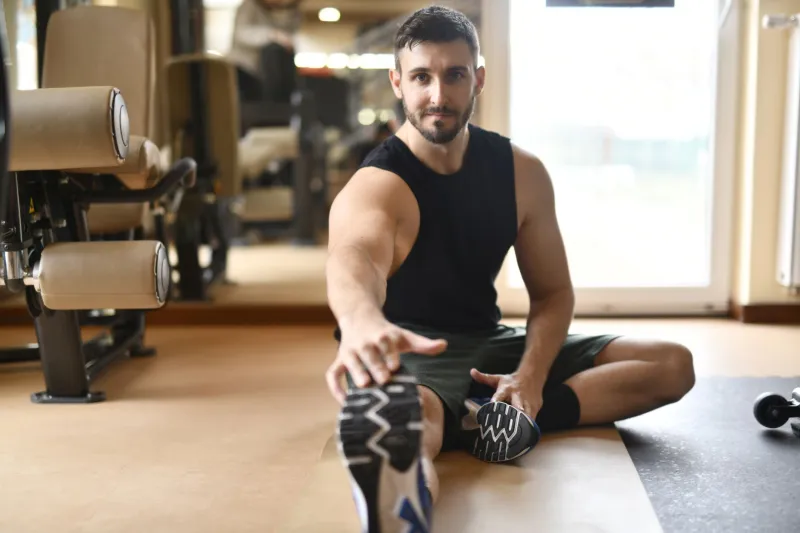
Photo: Shixart1985, CC BY 2.0, via Wikimedia Commons
If you've spent any time in fitness spaces — online or in a gym — you've heard some version of this: "You have 30 minutes after your workout to get protein in, or you're wasting everything you just did." Maybe you've rushed to your car to chug a shake before the clock ran out. Maybe you've felt genuine anxiety about being stuck in traffic after a training session.
Here's the thing: that anxiety? Largely unnecessary.
The research on protein timing has evolved significantly over the last decade, and what it's pointing to might surprise you — especially if you've been a stickler about post-workout nutrition for years.
Where the "Anabolic Window" Idea Came From
The concept of a tight post-workout protein window isn't completely made up. Early sports science research did show that muscle protein synthesis — the process your body uses to repair and grow muscle tissue — spikes after resistance training. Logically, getting amino acids into your system during that spike seemed like a smart play.
The problem is that early studies were often conducted under fairly specific conditions: subjects who trained fasted, very short measurement windows, and controlled lab environments that don't exactly mirror real-world training. When researchers started designing studies that better reflected how people actually eat and train, the picture got a lot more nuanced.
What More Recent Research Is Actually Showing
A landmark meta-analysis published in the Journal of the International Society of Sports Nutrition looked at 23 studies examining protein timing and its effect on muscle strength and hypertrophy. The conclusion? Once total daily protein intake was accounted for, the timing of that protein had a much smaller — and often statistically insignificant — effect on outcomes.
In plain English: how much protein you eat across the whole day matters far more than when you eat it.
More recent work from researchers like Dr. Brad Schoenfeld and Dr. Alan Aragon has continued to reinforce this. Their findings suggest that the "anabolic window" is actually much wider than 30 minutes — potentially several hours on either side of your training session. And for people who eat a protein-containing meal within a few hours before training, the urgency of immediately post-workout nutrition drops even further.
Your muscles don't have a stopwatch. They're not shutting down protein synthesis because you didn't slam a shake by the 29-minute mark.
The Consistency Advantage
Here's where this gets genuinely useful for your day-to-day life: when athletes shift their focus from obsessing over timing to simply hitting a solid daily protein target, adherence tends to go up — and so do results.
Why? Because rigid timing rules create friction. If you miss your window, you feel like you've failed, which can spiral into an all-or-nothing mindset that undermines your overall consistency. We've talked before on this site about how black-and-white thinking quietly wrecks fitness progress, and protein timing perfectionism is a classic example.
When the goal is simply "eat enough protein spread reasonably across the day," it becomes a lot easier to maintain that habit week after week, month after month. And in fitness, months of consistent effort beat weeks of perfect timing every single time.
So What Does "Enough Protein" Actually Look Like?
Most evidence-based recommendations for active individuals who are resistance training land somewhere between 0.7 and 1 gram of protein per pound of bodyweight per day. For a 160-pound person, that's roughly 112 to 160 grams daily.
Rather than fixating on a post-workout shake, try distributing that protein across three to five meals or snacks throughout the day. Research does suggest that spreading protein intake — rather than eating most of it in one sitting — supports muscle protein synthesis more effectively than front- or back-loading. But that's about distribution across the day, not about a specific 30-minute post-workout slot.
Some practical examples of protein-rich foods that make hitting your daily targets easier:
- Greek yogurt (~17g per cup)
- Chicken breast (~26g per 3 oz)
- Eggs (~6g per egg)
- Cottage cheese (~14g per half cup)
- Canned tuna (~20g per can)
- Protein powder if whole food options aren't always convenient
When Timing Does Matter (A Little)
Let's be fair here — timing isn't completely irrelevant. If you're training multiple times per day, or you're an advanced athlete with very high performance demands, optimizing the timing of nutrients becomes more meaningful. And if you're training completely fasted and your last meal was five or six hours ago, getting something in post-workout sooner rather than later makes sense.
But for the majority of recreational athletes and dedicated fitness enthusiasts — people training three to five times per week and eating reasonably throughout the day — the marginal benefit of nailing a 30-minute window is genuinely small. Definitely not worth the mental overhead.
The Bigger Takeaway
Fitness culture loves precision. It loves rules and windows and protocols because they feel scientific and serious. But sometimes the most effective approach is also the simplest one.
Hit your daily protein target. Spread it out reasonably. Train consistently. The gains will come — whether your shake hits at minute 22 or minute 90.
Reducing the stress around meal timing isn't laziness. It's actually a smarter, more sustainable way to train. And sustainable is the whole game.