Do Less, Gain More: The Smart Athlete's Guide to the Minimum Effective Dose

Do Less, Gain More: The Smart Athlete's Guide to the Minimum Effective Dose
Here's something most fitness culture won't tell you: doing more isn't always better. In fact, for a huge chunk of dedicated people out there, doing too much is exactly what's holding them back.
There's a concept borrowed from pharmacology that's quietly reshaping how smart coaches and sports scientists think about training. It's called the minimum effective dose — and once it clicks, it changes everything about how you approach your workouts.
What Exactly Is the Minimum Effective Dose?
In medicine, the minimum effective dose (MED) is the smallest amount of a drug needed to produce a measurable, therapeutic effect. Go below it, nothing happens. Go above it, you risk side effects without extra benefit.
Apply that same logic to fitness and the principle is surprisingly elegant: there's a threshold of exercise that triggers the adaptations you want — strength gains, fat loss, improved cardiovascular fitness — and beyond that threshold, you're mostly just accumulating fatigue.
Tim Ferriss popularized the idea in the fitness world, but the research backing it up goes much deeper than any self-help book. Studies published in journals like the Journal of Strength and Conditioning Research have consistently shown that even one to two strength training sessions per week can produce significant muscle and strength gains in both beginners and intermediate lifters, provided intensity is sufficiently high.
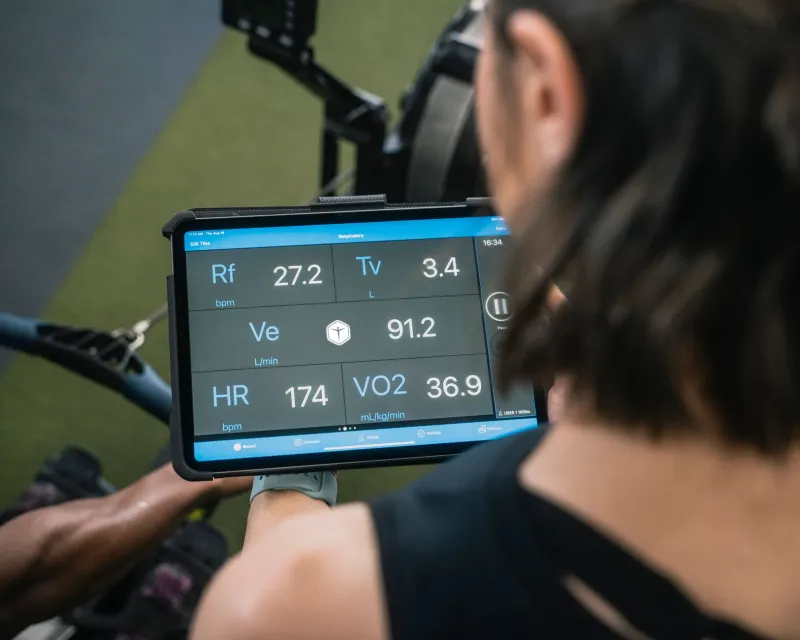
For cardiovascular fitness, the American College of Sports Medicine notes that meaningful improvements in VO2 max and heart health can be achieved with as little as 75 minutes of vigorous activity per week — that's three 25-minute sessions. Not the two-hour daily grind you see glorified on social media.
Why Americans Fall Into the 'More Is More' Trap
Let's be honest about the culture we're operating in. American fitness media is obsessed with extremes. Six-day-a-week programs, two-a-days, HIIT every morning before sunrise — the messaging everywhere is that if you're not suffering, you're not trying hard enough.
And most people trying to stay fit are also juggling full-time jobs, kids, aging parents, social obligations, and the general chaos of modern life. So when they can't sustain a punishing program, they don't just quit the program — they quit themselves. They label it a motivation problem when it's really just a design problem.
The all-or-nothing mindset is one of the most common patterns I see with new clients. They go hard for three weeks, burn out, disappear for two months, and then restart the cycle feeling worse about themselves than when they started.
What the Research Actually Says About Training Frequency
Here's where the science gets genuinely reassuring. A 2019 meta-analysis in the Journal of Strength and Conditioning Research found that training a muscle group once per week produced comparable hypertrophy to training it two or three times per week — as long as total weekly volume was equated. Frequency, on its own, isn't the magic variable most people assume it is.
For endurance, Norwegian researchers studying recreational athletes found that two quality sessions per week — one threshold effort, one longer moderate-intensity session — produced fitness improvements nearly identical to athletes training four to five times per week at lower intensities.
The takeaway isn't that you should do as little as possible. It's that intensity and consistency over time beat volume and frequency every single time when you're a real person with a real life.
What a Minimum Effective Dose Week Can Actually Look Like
You don't need to reinvent everything. Here's a practical example of what hitting your MED might look like across a week:
Strength training (2 sessions):
- Full-body compound movements — squats, deadlifts, rows, pressing
- 3-4 sets per exercise, working at a challenging but controlled effort
- 45–60 minutes per session
Cardio (1–2 sessions):
- One 20–25 minute higher-intensity interval session
- One 30–40 minute moderate-paced walk, bike ride, or swim
Movement throughout the week:
- Daily walks, taking stairs, active errands — these add up more than people realize
That's it. Three to four intentional training touchpoints per week, each one done with actual focus and effort. For most people, this is enough to build real strength, maintain a healthy body composition, and feel genuinely good in their bodies — without the workout becoming another source of stress.
How to Know If You're Above or Below Your Threshold
Finding your personal MED isn't about guessing. There are some clear signals to pay attention to:
Signs you're below your effective dose:
- Progress has completely stalled for more than 3–4 weeks
- Workouts feel effortless without any real challenge
- You're never sore or fatigued in any meaningful way
Signs you're above your effective dose:
- Persistent fatigue that sleep doesn't fix
- Motivation dropping sharply despite genuinely wanting to train
- Nagging joint pain or recurring minor injuries
- Performance declining week over week instead of improving
Most people who've been in the all-or-nothing cycle are actually living above their MED when they're "on" and way below it when they crash. Neither extreme produces the results they're chasing.
The Katherine Mason Approach: Precision Over Volume
This is a core principle in how I build training programs for clients. The goal isn't to fill your calendar with workouts — it's to identify the specific inputs that move the needle for your body, your schedule, and your goals, and then protect those inputs ruthlessly.
That means being strategic about which sessions get your full intensity, building in real recovery, and resisting the temptation to add more just because you feel guilty on a rest day. Rest days aren't wasted days. They're when your body actually does the work of changing.
When clients shift from chasing volume to chasing quality, something interesting happens: they stop dreading their workouts. They start showing up more consistently. And the results — the actual, measurable, in-the-mirror results — start compounding in ways that years of grinding never delivered.
Start Smarter, Not Harder
If you've been spinning your wheels trying to out-train your schedule, it might be time to flip the script. Less, done well and done consistently, will almost always beat more done sporadically and with leftover energy.
Find your floor. Train above it with purpose. Recover like it's part of the program — because it is.
That's not the lazy way to train. That's the smart way.