The Five Minutes Before You Lift Are Worth More Than You Think
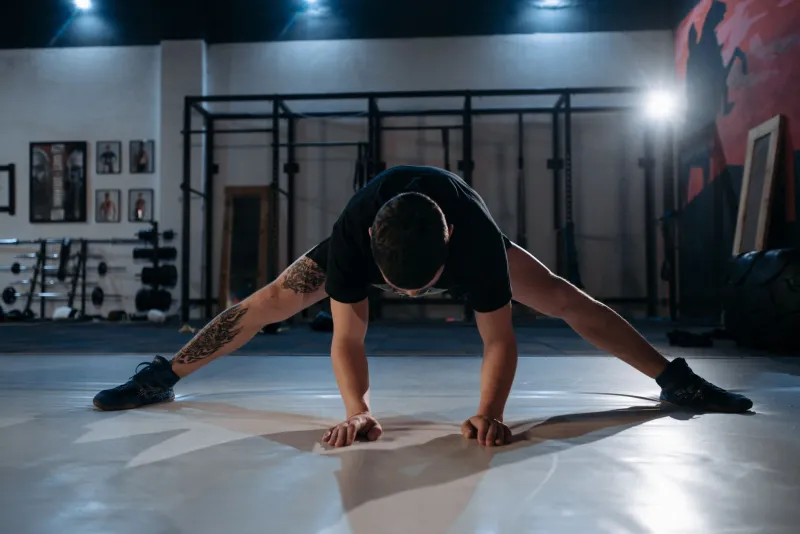
Let's be honest. You've done it. You've walked into the gym, done a couple of shoulder rolls, maybe jogged in place for thirty seconds, and then loaded up the bar like that counted as preparation. We've all been there.
But here's the thing — that rushed, half-hearted routine before your session might be the single biggest thing standing between you and the results you're after. Not your programming. Not your diet. Not even your sleep schedule. The way you prime your body before a single rep gets done matters way more than most people realize.
At Katherine Mason Fitness, the warm-up isn't an afterthought. It's built directly into every program, treated with the same intentionality as the working sets themselves. And once you understand why, you'll stop treating those first few minutes like dead time.
What's Actually Happening in Your Body Before You Train
Your nervous system is the command center for everything you do in the gym. Every contraction, every stabilization, every explosive movement — it all starts with a signal from your brain traveling down through your spinal cord and out to your muscles. When you're cold, that communication is slow and imprecise.
Think of it like your phone on a bad connection. The messages are getting through, but they're delayed and garbled. That's your neuromuscular system at rest.
A proper warm-up changes the transmission quality entirely. As your core temperature rises and blood flow increases to working muscles, nerve conduction velocity actually speeds up. Your motor units — the functional units of muscle fibers and the nerves that control them — get recruited more efficiently. The result is better force output, sharper coordination, and faster reaction time from your very first rep.
Research published in sports science literature consistently shows that athletes who perform structured warm-ups demonstrate meaningfully higher peak power output compared to those who skip it. We're not talking marginal gains. We're talking the kind of difference that shows up in your lifts, your sprint times, and your ability to control movement under load.
The Injury Connection Nobody Talks About Enough
Here's the part that should really get your attention: most training injuries aren't random. They're predictable. And a huge percentage of them happen because someone asked their body to do something it wasn't ready for.
Cold muscle tissue is stiffer and less extensible than warm tissue. Tendons and ligaments, which don't have the same blood supply as muscle, take even longer to reach optimal pliability. When you load stiff tissue aggressively — especially with compound movements like squats, deadlifts, or overhead pressing — you're dramatically increasing the odds of a strain, pull, or something worse.
A smart warm-up changes the mechanical properties of your soft tissue before you ask it to work hard. It increases synovial fluid production in your joints, which acts like oil in a hinge. It improves the elasticity of your fascia. It gets your stabilizer muscles firing so your primary movers aren't working in isolation.
None of that happens with a couple of arm circles.
Mobility Activation Is Not the Same as Stretching
One of the most common warm-up mistakes is confusing static stretching with mobility work. They're not the same thing, and the timing matters enormously.
Static stretching — holding a position for thirty to sixty seconds or more — has actually been shown to temporarily reduce force production when done immediately before training. You're essentially telling your nervous system to downregulate muscle tension right before you need it to be high. That's working against yourself.
Mobility activation, on the other hand, is dynamic. It moves your joints through their full range of motion with control and intention. Hip circles, leg swings, thoracic rotations, banded pull-aparts, deep squat holds with active movement — these wake up the muscles that support your joints without blunting their ability to contract powerfully.
The goal of a good warm-up isn't to relax your muscles. It's to teach them where they are in space, remind them of the movement patterns you're about to demand, and get your proprioceptive system fully online before load gets involved.
Katherine's Approach: The Warm-Up Is Part of the Program
Every training program on Katherine Mason Fitness is built with warm-ups that are specific to the session — not generic. If you're training lower body that day, your warm-up is targeting hip mobility, glute activation, and ankle stability. If it's an upper body push day, you're working on shoulder external rotation, thoracic extension, and rotator cuff engagement.
This isn't just about injury prevention, though that's a huge part of it. It's about performance from rep one.
Most people have experienced that awkward first few sets of a workout where nothing feels right. The bar path is off, the movement feels clunky, and you're not hitting the positions you know you're capable of. Then around set three or four, things click into place. That's your body finally getting warmed up — which means your first few sets were essentially wasted.
A deliberate, session-specific warm-up compresses that lag time dramatically. By the time you get to your working sets, your body is already operating closer to its peak capacity. You get more out of every set you actually count.
A Simple Framework to Start Using Right Now
You don't need a complicated protocol to get this right. Here's the basic framework Katherine uses across her programming:
Elevate your heart rate first. Five minutes of low-intensity cardio — rowing, cycling, a brisk walk — gets blood moving and starts raising core temperature. This doesn't need to be intense. It just needs to happen.
Move your joints dynamically. Pick three to five movements that target the areas you're about to train. Leg swings, hip 90/90 transitions, shoulder CARs (controlled articular rotations), world's greatest stretch — these are all solid options depending on your session.
Activate your stabilizers. This is where targeted work comes in. Glute bridges before squats. Band pull-aparts before pressing. Dead bugs before any core-heavy session. These exercises fire up the muscles that often go quiet during compound movements, making your whole body work as a unit instead of compensating.
Do a movement rehearsal. Perform your main lift or movement pattern at a very low weight or with no load at all. This isn't a working set. It's your nervous system's final dress rehearsal before the real performance begins.
The whole thing takes eight to twelve minutes. That's it. And what you get in return is a body that's actually ready to train — not one that spends the first third of your session catching up.
Train Smarter by Starting Smarter
The athletes who stay consistent, stay healthy, and keep making progress year after year aren't necessarily the ones who work the hardest. They're the ones who understand how to prepare their body to work hard effectively.
Your warm-up is the opening argument for everything that follows. Make it count.